
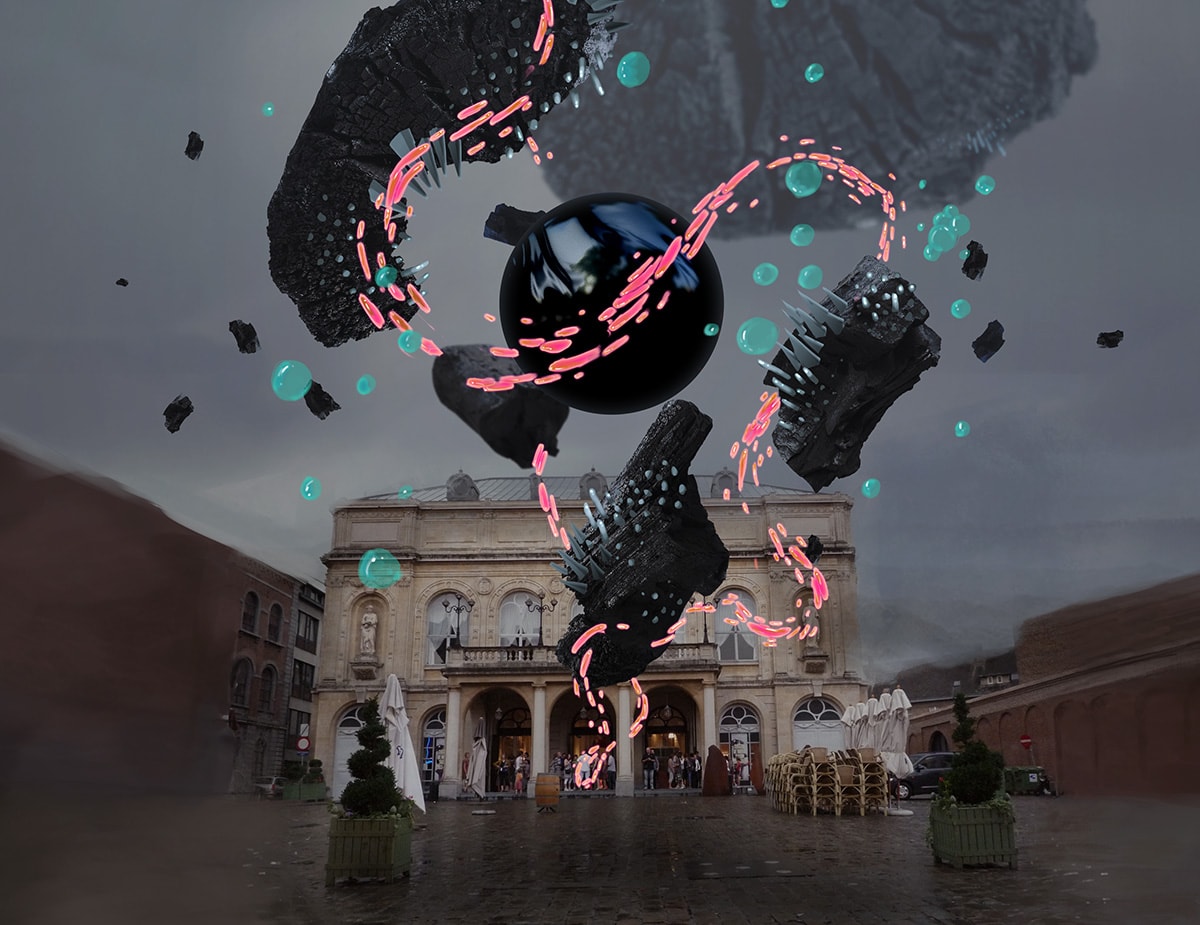
So far, I’ve been using the same method of projection throughout my practice with digital 3D artwork, this being the modified ‘Peppers Ghost Pyramid’ which relies upon a physical tool to create a 3D impression as opposed to ‘pure’ projection. (Pure 3D projection requires an actual 3D projector, a very pricy bit of tech, so the more budget and ‘homemade’ aesthetic is a natural part of my practice, trying to overcome this problem with tricks and crafty hacks). However, I am always on the lookout for new ways to make it look better either by improving what I already have or discovering something new that could potentially replace it.
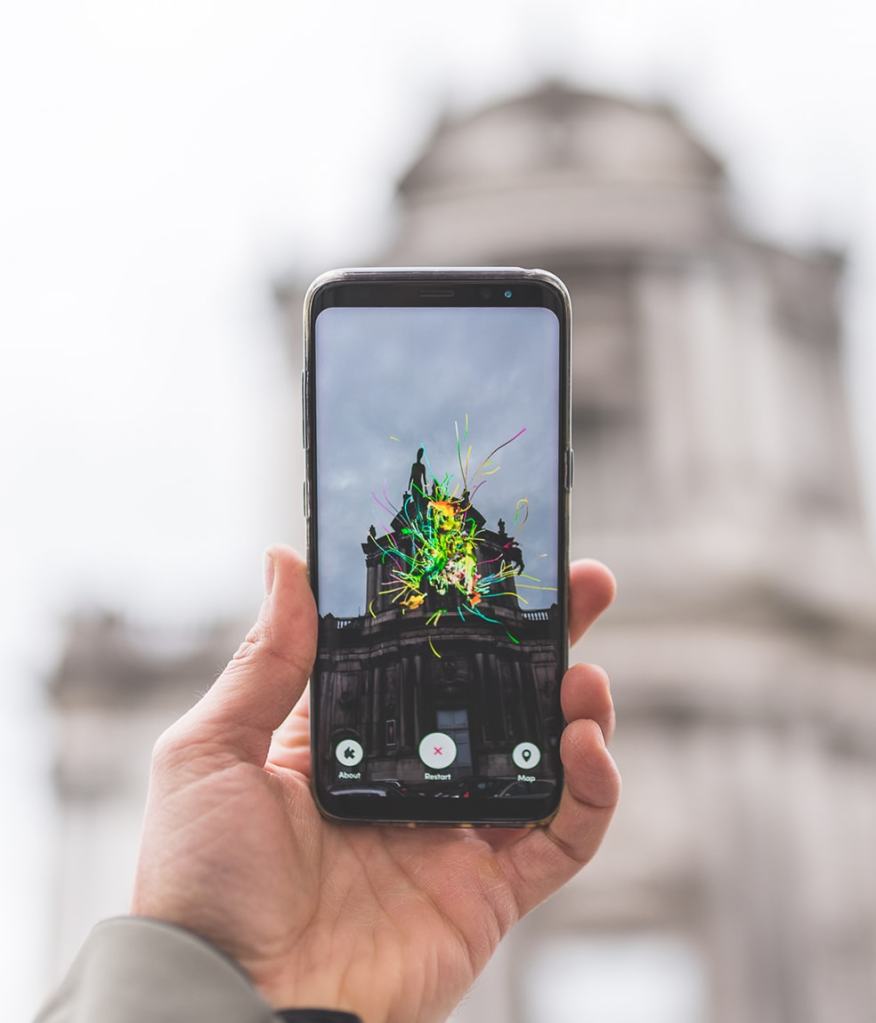
Lately I have been looking at AR (Augmented Reality) and how game developers use AR to integrate the real physical space into the virtual. For example, creating a 3D model that sits on a table and is static and which can only be viewed when looking at it through a phone screen or VR headset. This is different from a projection pyramid because it uses purely digital means instead of needing a physical sister sculpture to assist it. So, in a way if I want my project to focus on digital technology and how it improves/alters out lives then maybe I should be working towards eliminating the majority of physical tools.
AR:
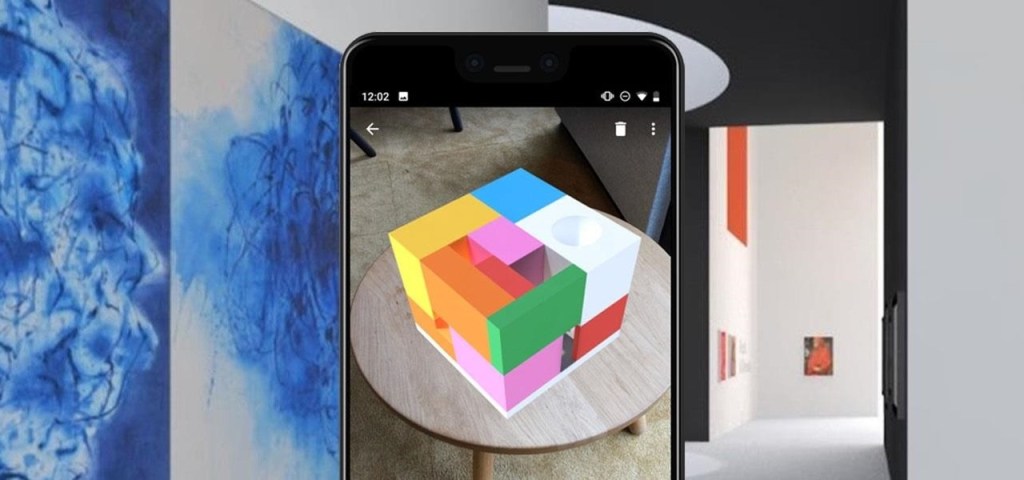
Augmented reality is where a digital object is placed inside a physical space. E.g. putting a virtual cup on a real wooden table and having it stay there, being able to turn around and turn back and have it still be there. This works because the device (Phone or VR headset) notices the tilt and change in direction when you move. This is a great quality of modern technology, the ability to detect changes in movement and the fact that the camera can read spaces being viewed and distinguish between say, the floor as a surface and a table as a raised surface.
These qualities make it ideal for art in my opinion as it means I can show my artwork in its 3D format while allowing people to walk around it and get closer to it. They can even view it from above, something that is not possible with my projection pyramid. So, AR adds further viewing ability as well as the ability to simply place something. (The process of setting up my projection pyramid and the problems I always have getting it to work are frustrating and eliminating them I think will not only mean I can set up and test work more easily but also create work that doesn’t need to fit the small specification needed to display inside the pyramid).
Art and History Museum of Geneva – AR & 3Dscan
Virtual Mapping:
One really interesting thing about AR is its use of virtual mapping which means that you can scan and map a large space. Most easily available AR apps work by utilising the small space which can be seen through a camera phone, but more advanced AR can use more expansive Virtual Mapping to scan a bigger area containing walls and other objects so that digital objects can have greater and more accurate integration.
The difference between normal AR would be the ability to place an object on the table and move around it, however if you get to far or too close inside the virtual object tends to glitch and disappear. In more advanced AR, you can leave the room and come back and because the whole house I virtually mapped, the virtual object is still there exactly where it was put.
This opens up the opportunity to have entirely digital displays of many pieces at once, all placed around one another, as opposed to one at a time as was the case with the projection pyramid. Instead I could hypothetically have an entire forest of brains, keeping the quality of the AR used in mind.
Also, on a more personal note AR makes me more motivated about my art. For a while now I’ve felt very disconnected and disenfranchised with art and digital practice too. I think this has been down to my projection pyramid not being what I had hoped and just the general feeling that my art isn’t very good. I think that with AR it gives me a new tool to work with and a reason to be excited about my work.

 --BLANKBRAIN--