
Artist website: http://joid.org/archive/
Jodi, or http://www.jodi.org, is a collective of two internet artists: Joan Heemskerk and Dirk Paesmans. Their background is in photography and video art; since the mid-1990s they started to create original artworks for the World Wide Web. A few years later, they also turned to software art and artistic computer game modification. Their most well-known art piece is their website, which is a landscape of intricate designs made in basic HTML.
In 1999 they began the practice of modifying old video games such as Wolfenstein 3D to create art mods like SOD. Their efforts were celebrated in the 1999 Webby Awards where they took top prize in the category of “net art”. Jodi used their 5-word acceptance speech (a Webby Award tradition) to criticize the event with the words “Ugly commercial sons of bitches.” Further video game modifications soon followed for Quake, Jet Set Willy, and the latest, Max Payne 2 (2006) to create a new set of art games. Jodi’s approach to game modification is comparable in many ways to deconstructivism in architecture, because they would disassemble the game to its basic parts, and reassemble it in ways that do not make intuitive sense. One of their more well-known modifications of Quake places the player inside a closed cube with swirling black-and-white patterns on each side. The pattern is the result of a glitch in the game engine discovered by the artists, presumably, through trial and error; it is generated live as the Quake engine tries, and fails, to visualize the interior of a cube with black-and-white checkered wallpaper.
Since 2002, they have been in what has been called their “Screen Grab” period, making video works by recording the computer monitor’s output while working, playing video games, or coding. Jodi’s “Screen Grab” period began with the four-screen video installation My%Desktop (2002), which premiered at the Plugin Media Lab in Basel. The piece appeared to depict mammoth Mac OS 9 computers running amok: opening windows cascaded across the screen, error messages squawked, and files replicated themselves endlessly. But this was not a computer gone haywire, but a computer user gone haywire. To make this video, Jodi simply pointed-and-clicked and dragged-and-dropped so frantically, it seemed that no human could be in control of such chaos. As graphics exploded across the screen, the viewer gradually realized that what had initially appeared to be a computer glitch was really the work of an irrational, playful, or crazed human.
“JODI’s work underlines the innate anarchy of the online medium, an arena that we’ve come to recognize as public but one that the duo constantly undermines and tweaks to their own purposes.”
MATERIAL WANT:
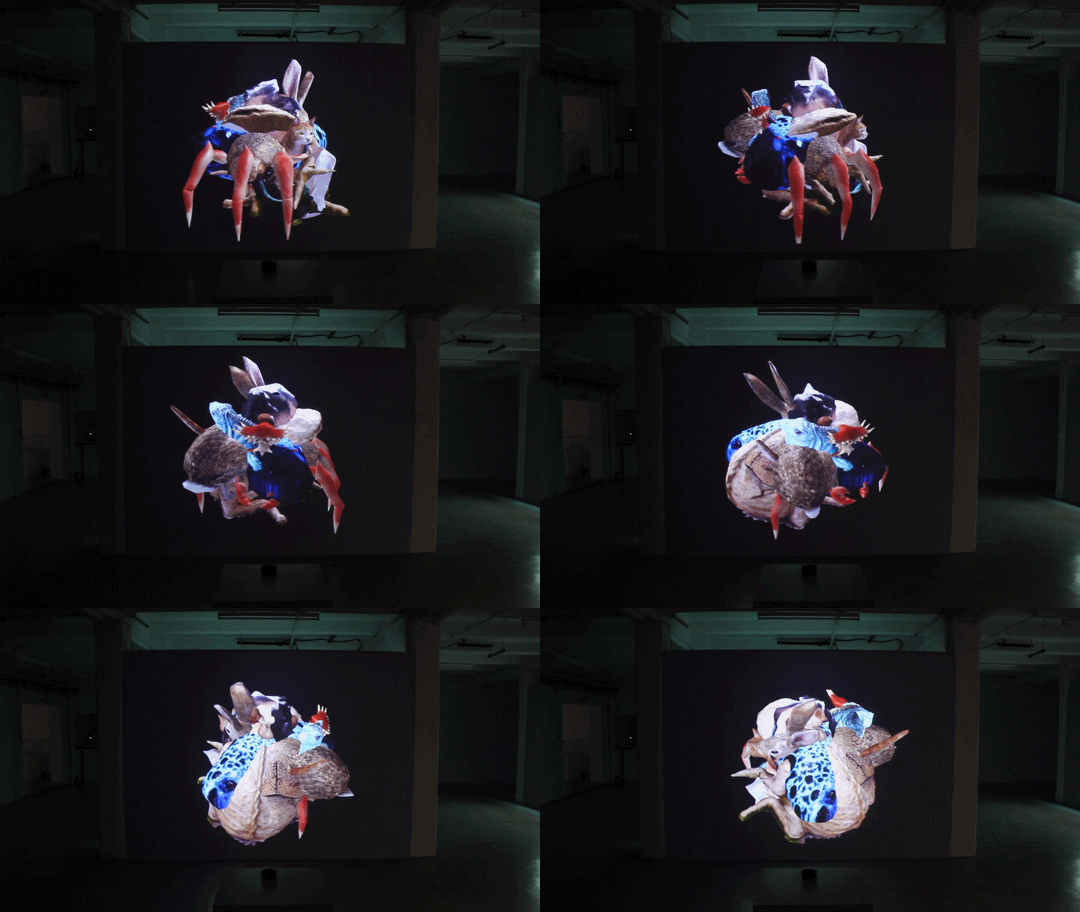
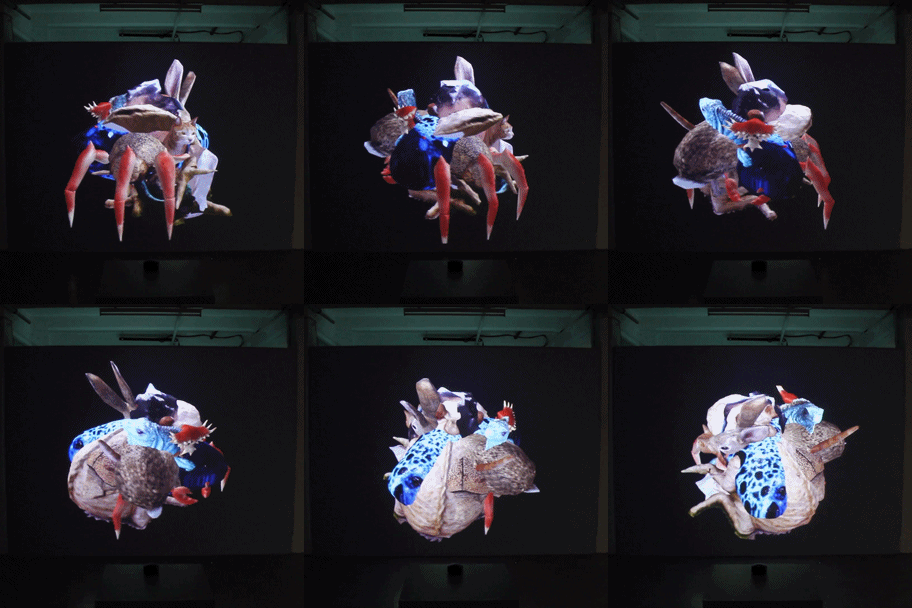
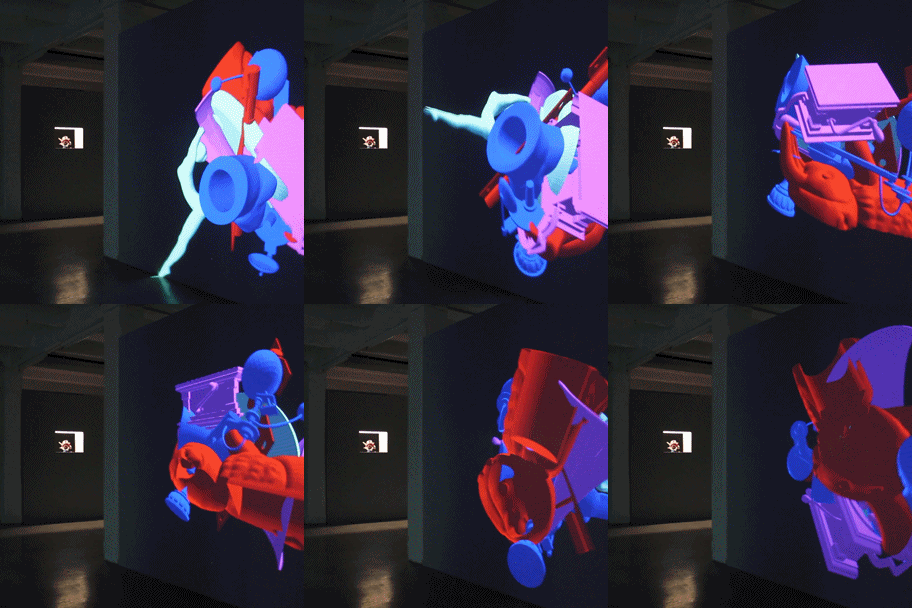
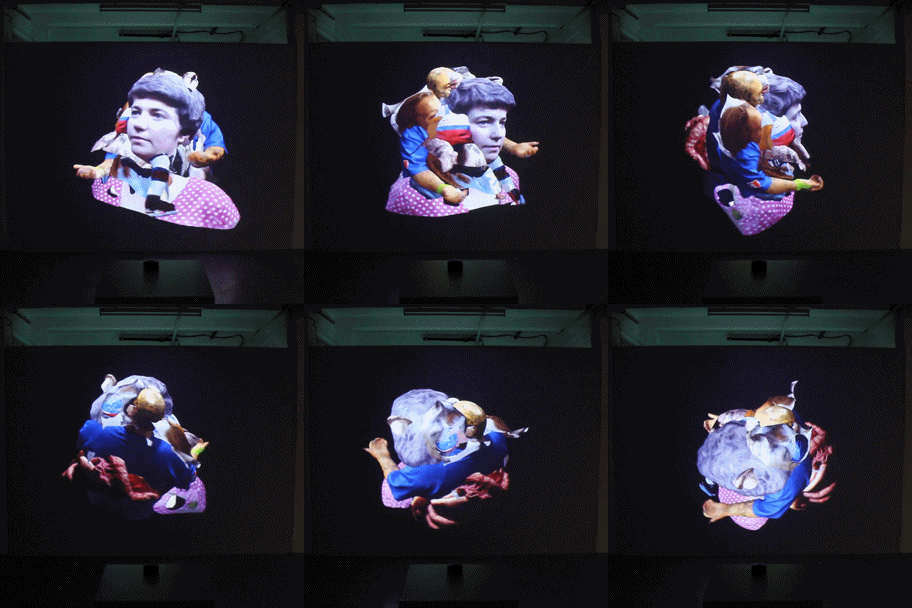
‘JODI explores the process of auto-assemblage of 3D scans and models to produce both virtual and physical sculptures: Material Want is an assemblage of interrelated elements: mined 3D models, 3D-printed objects, a shop-front installation and an online shop, powered by both software automation and human computation.
Material Want enacts a Ballardian scenario where content from 3D modelling and 3D scanning archives is mined for the production and sale of 3D printed objects, transforming junk files into saleable items. A present/future that follows the past, mirroring a history of material and labour exploitation, new production systems, and irrational material desires. MW uses both software automation bots and repetitive human activity to mine, select and sort. Amongst the many toys, body parts and household items, we also find reminders of our past wants for exotic animal products, rare minerals and priceless archeological discoveries. Materials require some transformation to render them as valuable commodities, and this is attempted by fusing models together, slicing and resizing them, and exhibiting these under ideal conditions, but what does this new source material want to be? The banal online shop, alike much e-commerce, is a front that masks the involvement of algorithmic automation, distributed human resources and manufacturing, and going further back; the amateur modellers and 3D scanning enthusiasts behind the source files. It remains unclear as to which degree bots or humans behaving like bots are behind the end product.’ – JODI
3D PROJECTION?
Heemskerk and Paesmans use of projection is unique as they utilize programs like Blender to create 3D models that are then animated to move about the screen in a variety of different ways. Multiple artworks of theirs utilize this method which uses model manipulation and projection to create a 3D feeling to the work when it is in fact 2D. I really like this idea of creating 3D work and it isn’t something I’ve seen a lot of. Most digital work has to be 2D due to the nature of the technology used to present it. Even when projected on a raised surface the work need exterior help to add texture to it’s appearance. However JODI attempt to to this without that and even though it’s not as effective as a 3D object the innovative idea is still interesting.

 --BLANKBRAIN--