

Artists Website: http://reas.com/
Casey was born 1972 in Troy, Ohio. Lives and works in Los Angeles.
Reas’ software, prints, and installations have been featured in numerous solo and group exhibitions at museums and galleries in the United States, Europe, and Asia. His work ranges from small works on paper to urban-scale installations and he balances solo work in the studio with collaborations with architects and musicians. Reas’ work is in a range of private and public collections, including the Centre Georges Pompidou and the San Francisco Museum of Modern Art. Reas is a professor at the University of California, Los Angeles. He holds a masters degree from the Massachusetts Institute of Technology in Media Arts and Sciences and a bachelor’s degree from the College of Design, Architecture, Art, and Planning at the University of Cincinnati. With Ben Fry, Reas initiated Processing in 2001; Processing is an open-source programming language and environment for the visual arts.
After graduating, Reas began to exhibit his software and installations internationally in galleries and festivals. Reas’s software generated images derive from short software-based instructions that visual create processes. The instructions are expressed in different media including natural language, machine code, and computer simulations, resulting in both dynamic and static images. Each translation reveals a different perspective on the process and combines with the others to produce continually evolving visual traces.
In 2001, together with MIT PhD candidate Ben Fry, Reas created the Processing programming language. Processing is widely used by thousands of artists and designers worldwide, and by educators teaching the fundamentals of programing in art and design schools.
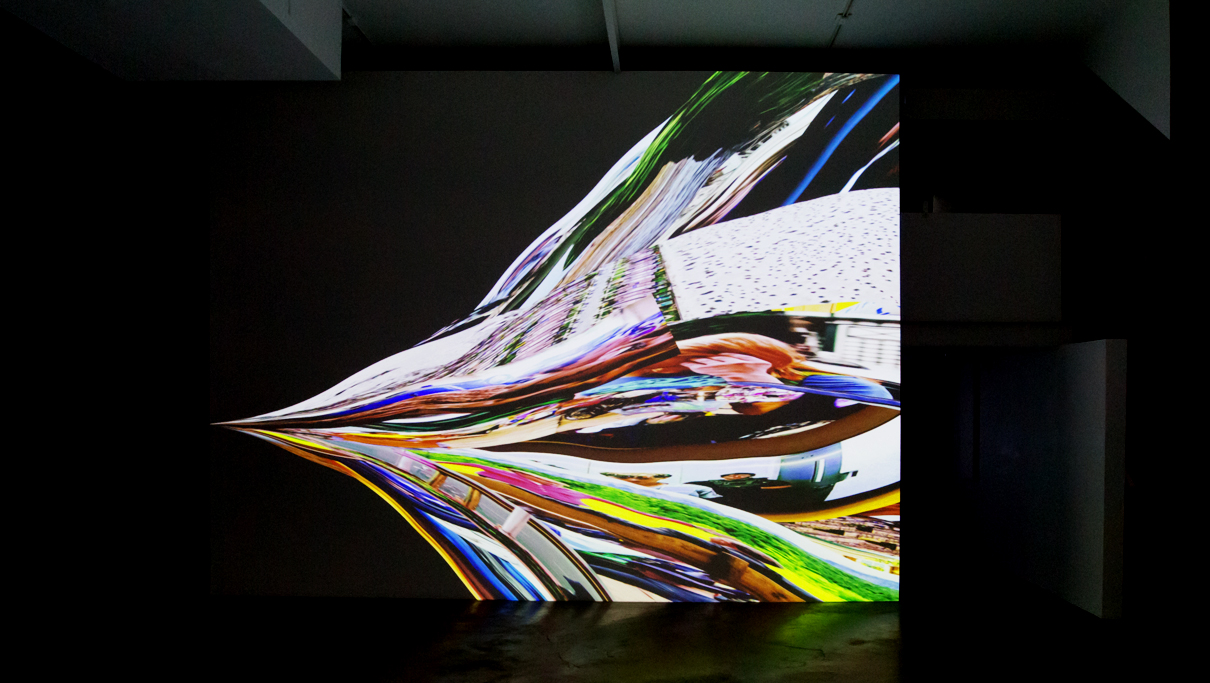
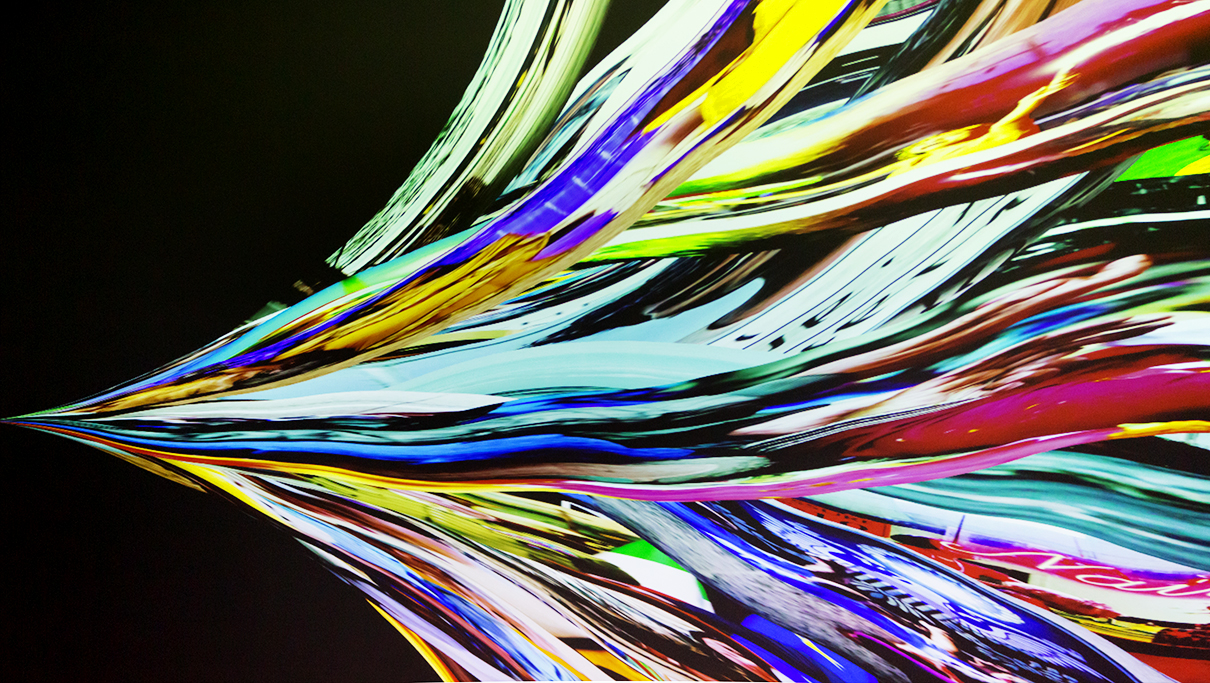
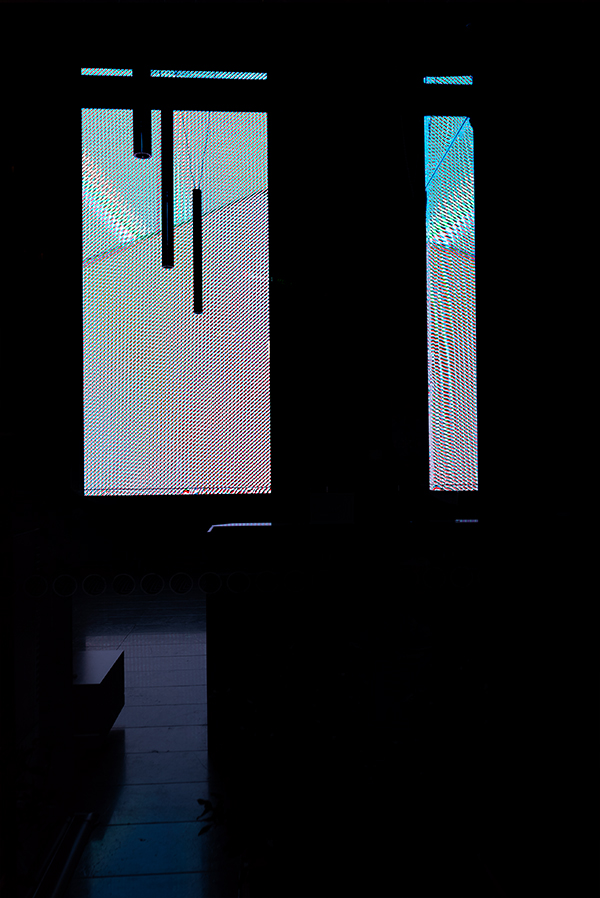
Since 2012, Reas has incorporated broadcast images into his work, algorithmically distorting them to create abstractions that retain traces of their original, representational function.
In 2003, Reas moved to Los Angeles where he is currently a Professor in the Department of Design Media Arts at the University of California, Los Angeles.
REAS AND PRESENTATION:
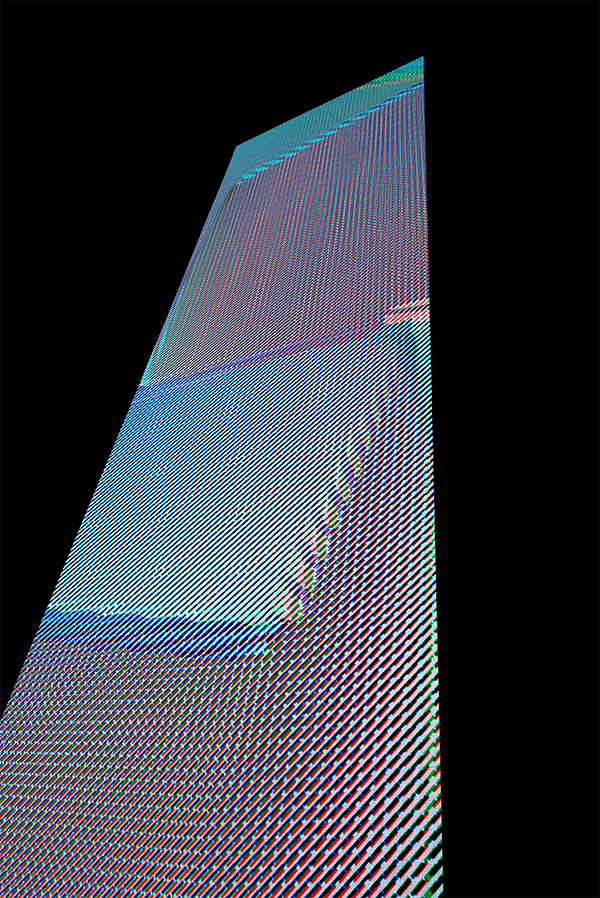
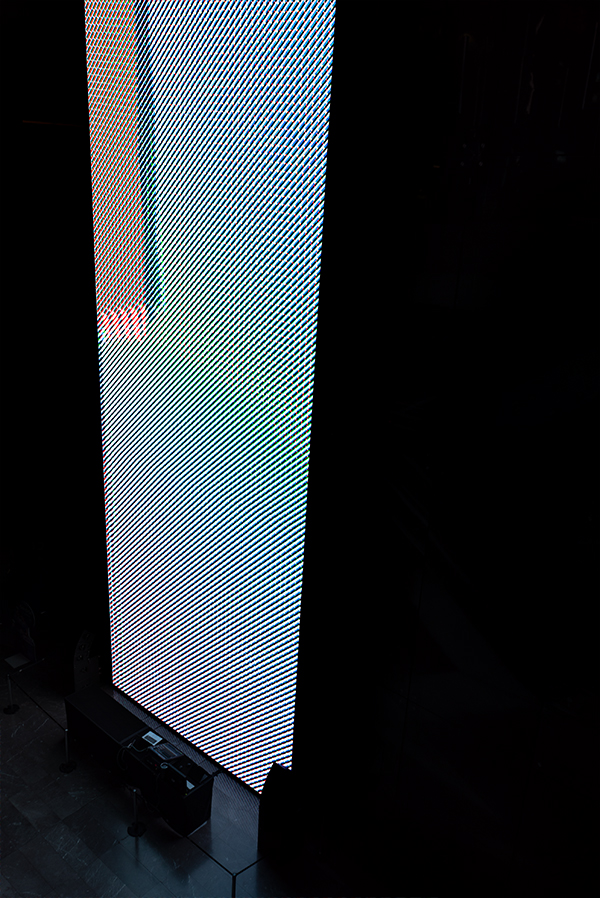
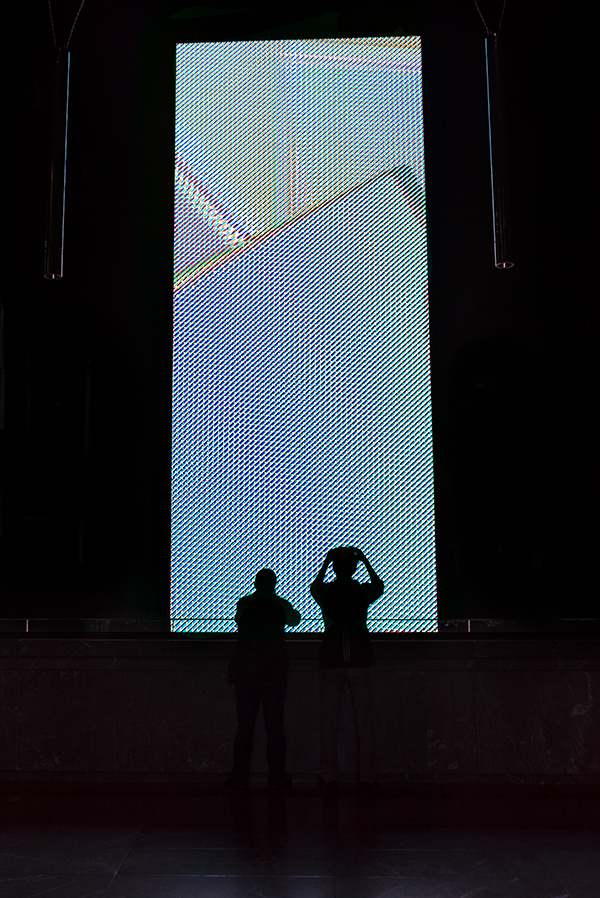
Reas uses large scale work to create the feeling of smallness in the viewer the work may seem simple and easy but it is the thought process which has gone into it’s display which is key to it’s presence, the emotions and ideas it provokes. It is not merely projected, it has specific arrangement and styles, it’s not just a rectangular projection, but has elements of depth given to it by her choice of space and its juxtaposition with other works.
The digital work one a small screen seems lesser than when it is exhibited as it’s presentation is key to the works personality as only then does it have the quality of scale.

 --BLANKBRAIN--